
ux case study
TROVE: An Art Ecosystem App
My extensive experience in selling art as both an individual artist and as a gallery owner has led me to consider how a local art scene facilitates relationships between artists and collectors, and what other arts professional roles aid both artists and collectors in achieving successful transactional experiences.
Particularly, I’ve observed that many artists are focused solely on creating their work, and often have not developed skills in presenting their work in a context that allows potential collectors to envision owning and enjoying that skillfully honed art. Collectors similarly do not typically know where to find art, where it would best be displayed and enjoyed in their home or other spaces, and almost certainly have reservations about installing that work themselves.
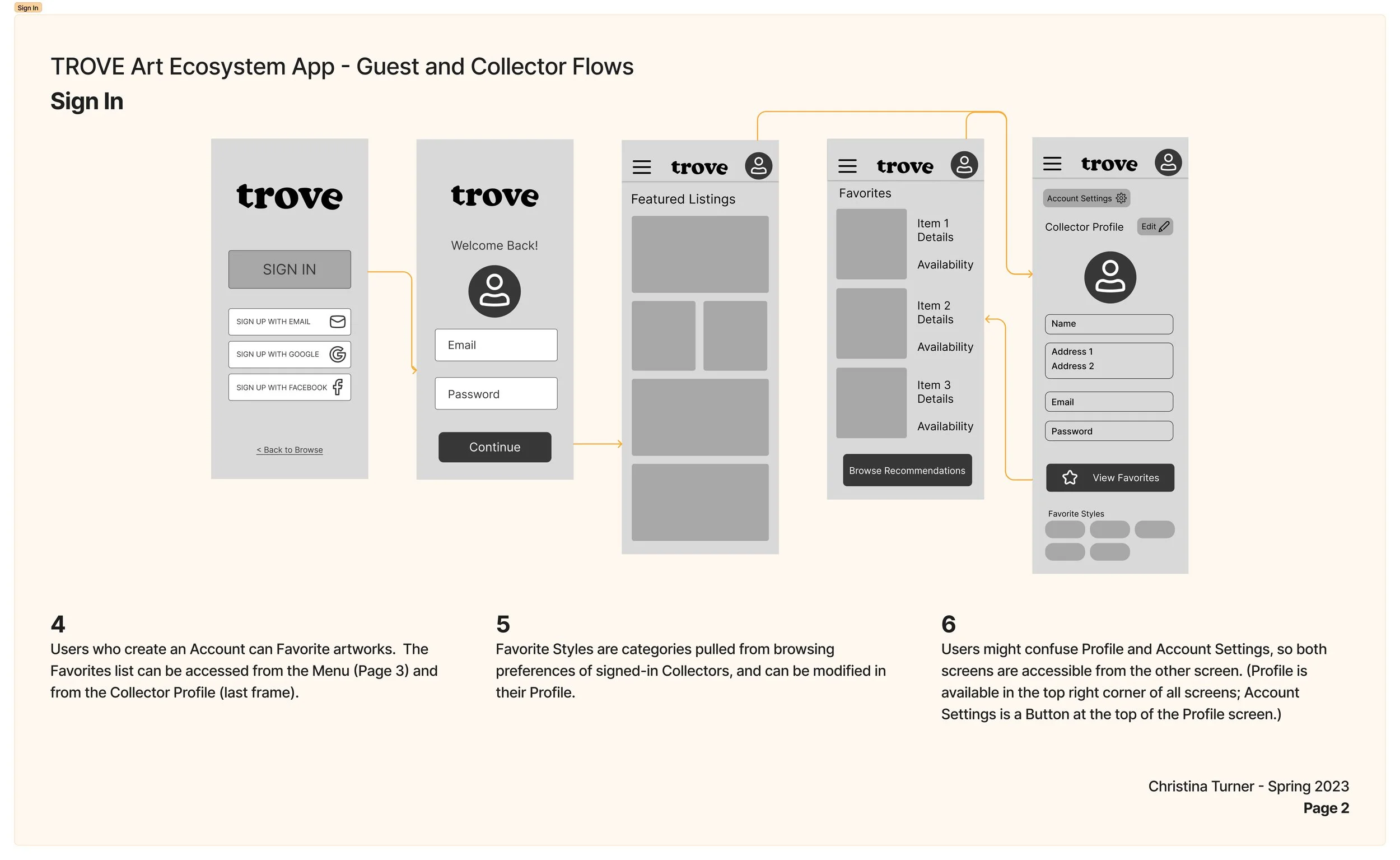
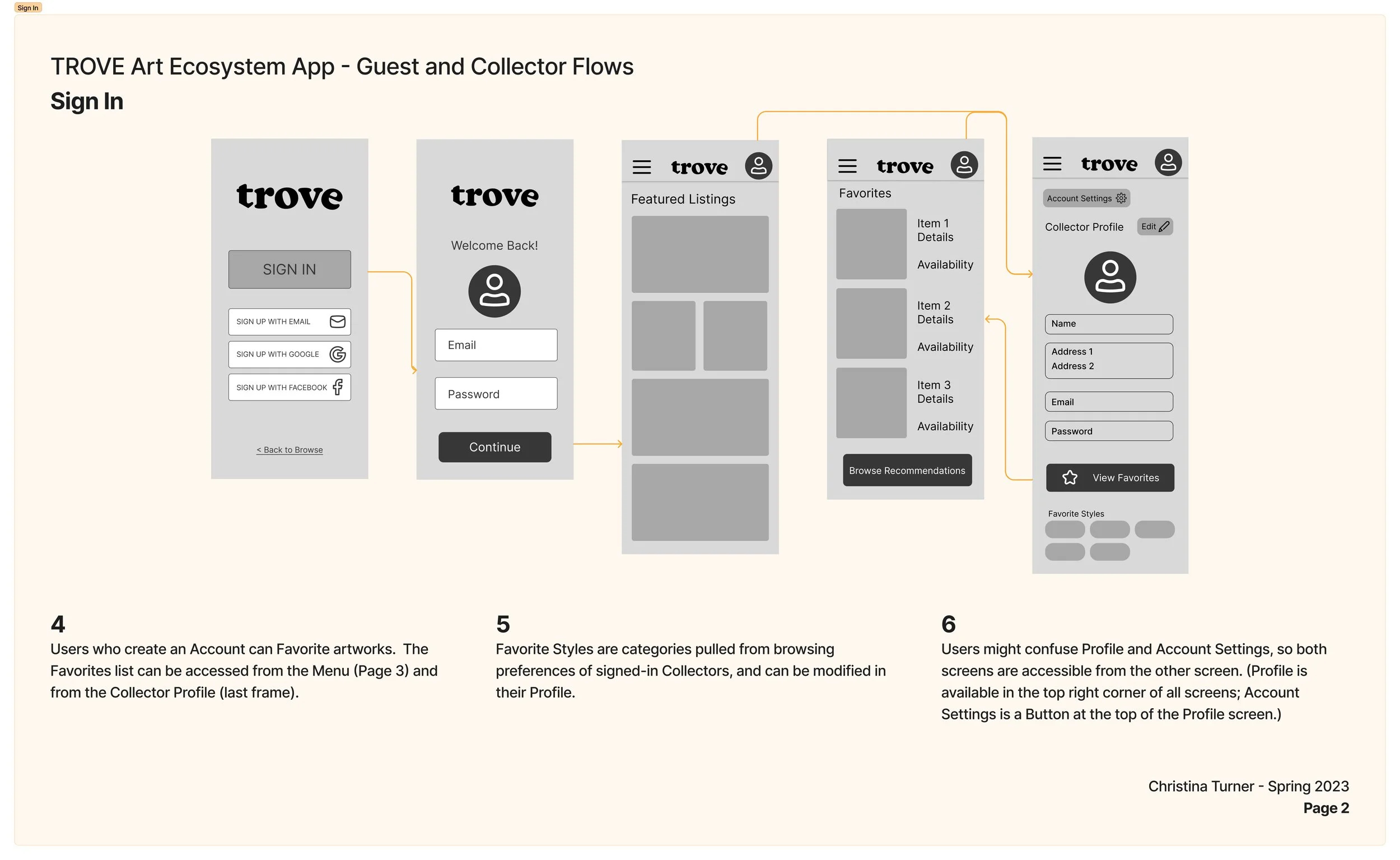
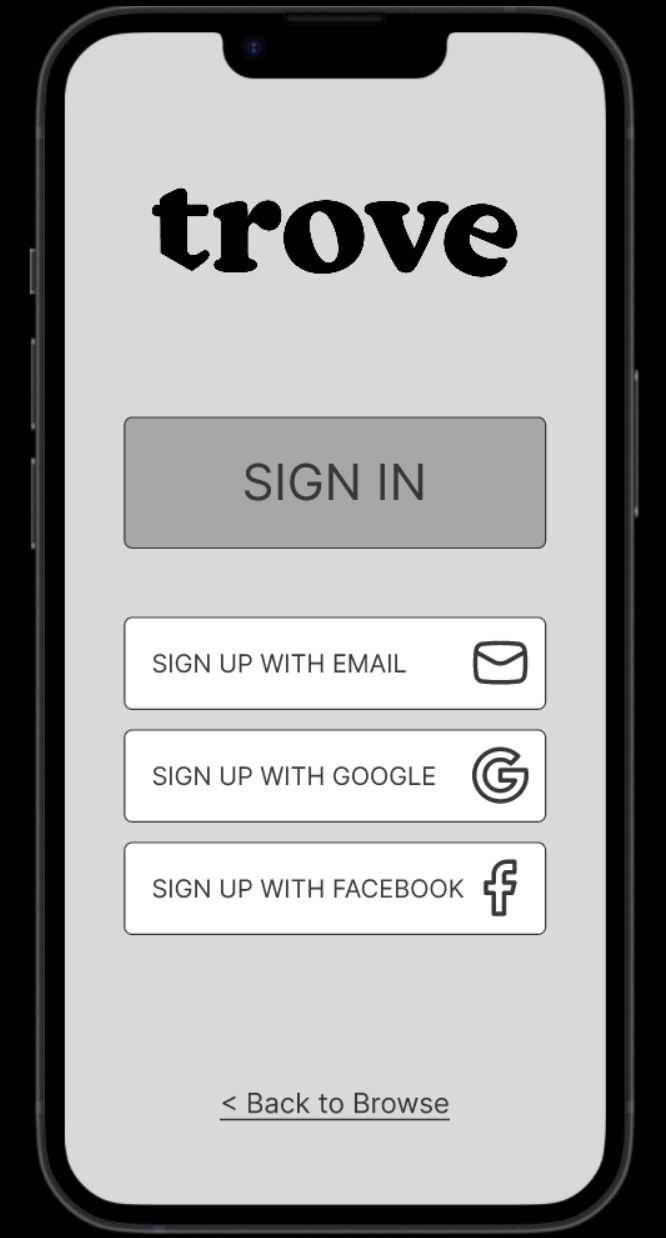
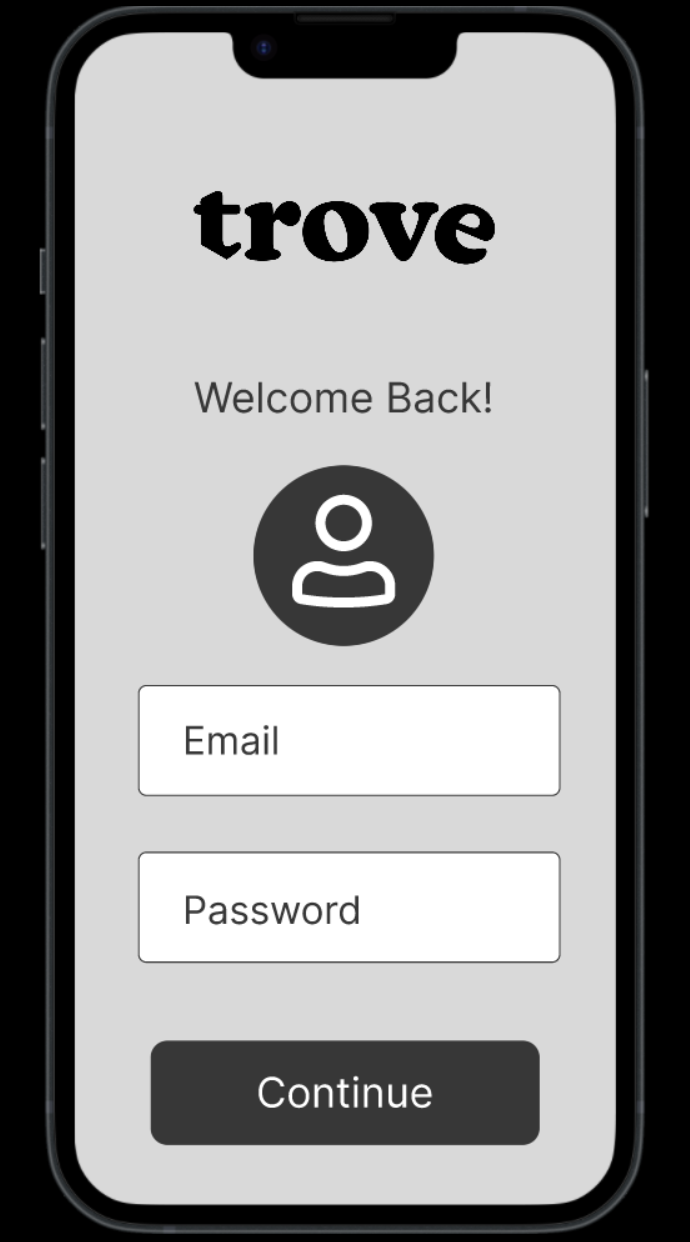
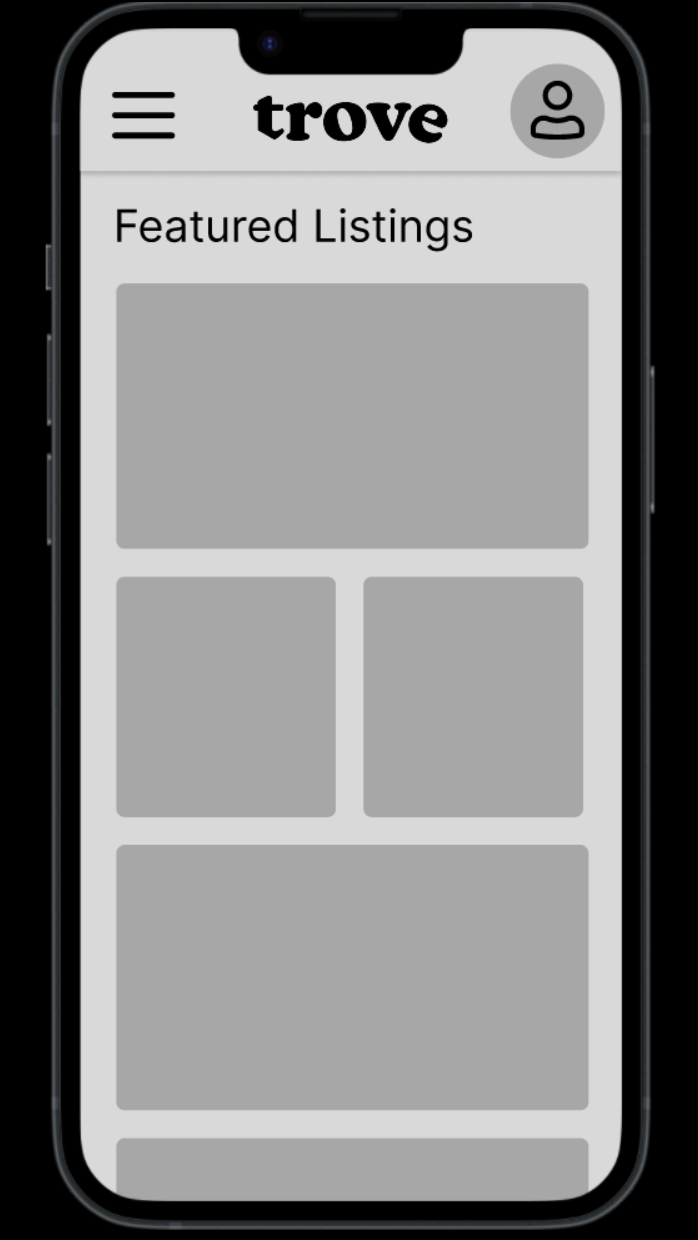
Selected screens from the Sign In flow. Additional features for Collectors who create accounts would include tailored Featured Listings landing page and the ability to add listings to a Favorites list.
Problem
In thriving art markets, galleries traditionally filled in the gaps by displaying art on pristine walls in hip locations, documenting the work photographically and in writing in catalogs and increasingly online, cultivating relationships with both artists and collectors and serving as a matchmaker for art work, and often including installation in the sale of an artwork.
Economic factors impacting all brick and mortar endeavors have resulted in the emergence of “art consultants” that essentially fill the role of a galleries without the overhead of a physical space (most art sales were not coming from a physical gallery space to begin with; galleries operated less like a typical retail establishment and more as permanent location for art-related marketing events known as “shows” where art was more of a backdrop for a recurring networking event, with the goal of building the gallery’s brand and growing the gallery’s network). Many art consultants today still operate regionally; however, they have networks they cultivated in physical gallery spaces in the past, as opposed to networks built entirely online. At the same time, logisitics of handling physical art (shipping large, heavy, or fragile works can be cost-prohibitive or even impossible, and installation without the artist present can be challenging for other types of art work) means art scenes remain largely place-based.
Action
To augment and expand a place-based art scene, I began to imagine what an app might look like that facilitated connections between local artists and collectors, looping in photographers, art consultants/curators, and installation professionals in the same geographical area.
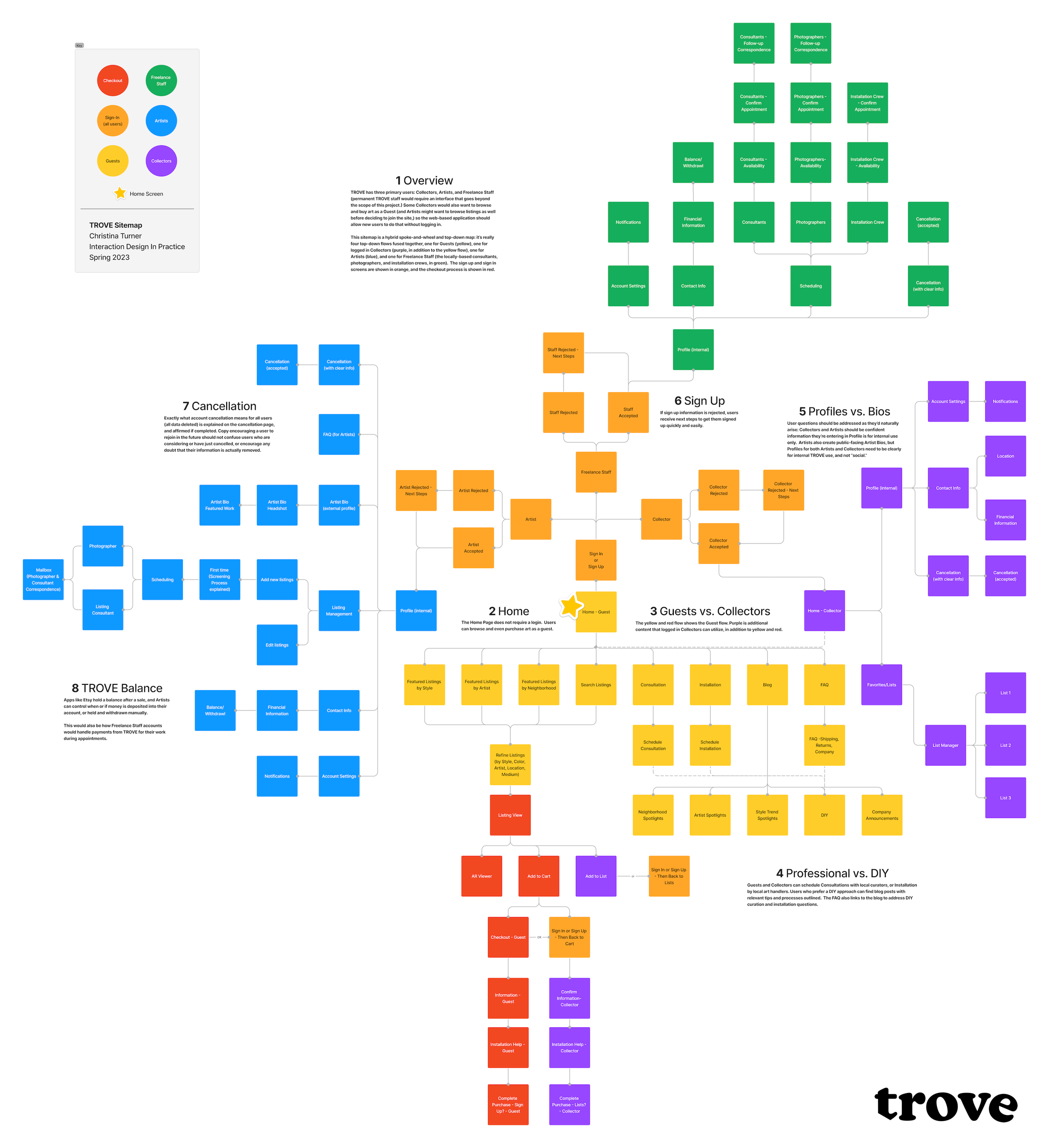
TROVE Sitemap details essentially 4 branches of the web application: pages for Guests, Collectors, Artists, and Arts Professionals
Result
Four types of users would utilize the TROVE web application. Guests are users who are curious about the site and want to browse, but might end up wanting to purchase art without creating an account. Collectors are users who want to save listings they like, get tailored recommendations based on their browsing and buying habits, set up appointments for professional arts services, and create a profile that saves information so they don’t have to reenter it when they return. Artists are users with very different needs from the web application, including creating listings, creating public-facing profile pages that introduce them to potential Guests/Collectors, and banking information to allow them to receive payment for their work. Similarly, Arts Professionals are users who would need to be able to list their availabilty for appointments for their services, create public profiles introducing themselves to Collectors, and link banking information to allow them to receive payments for their work.
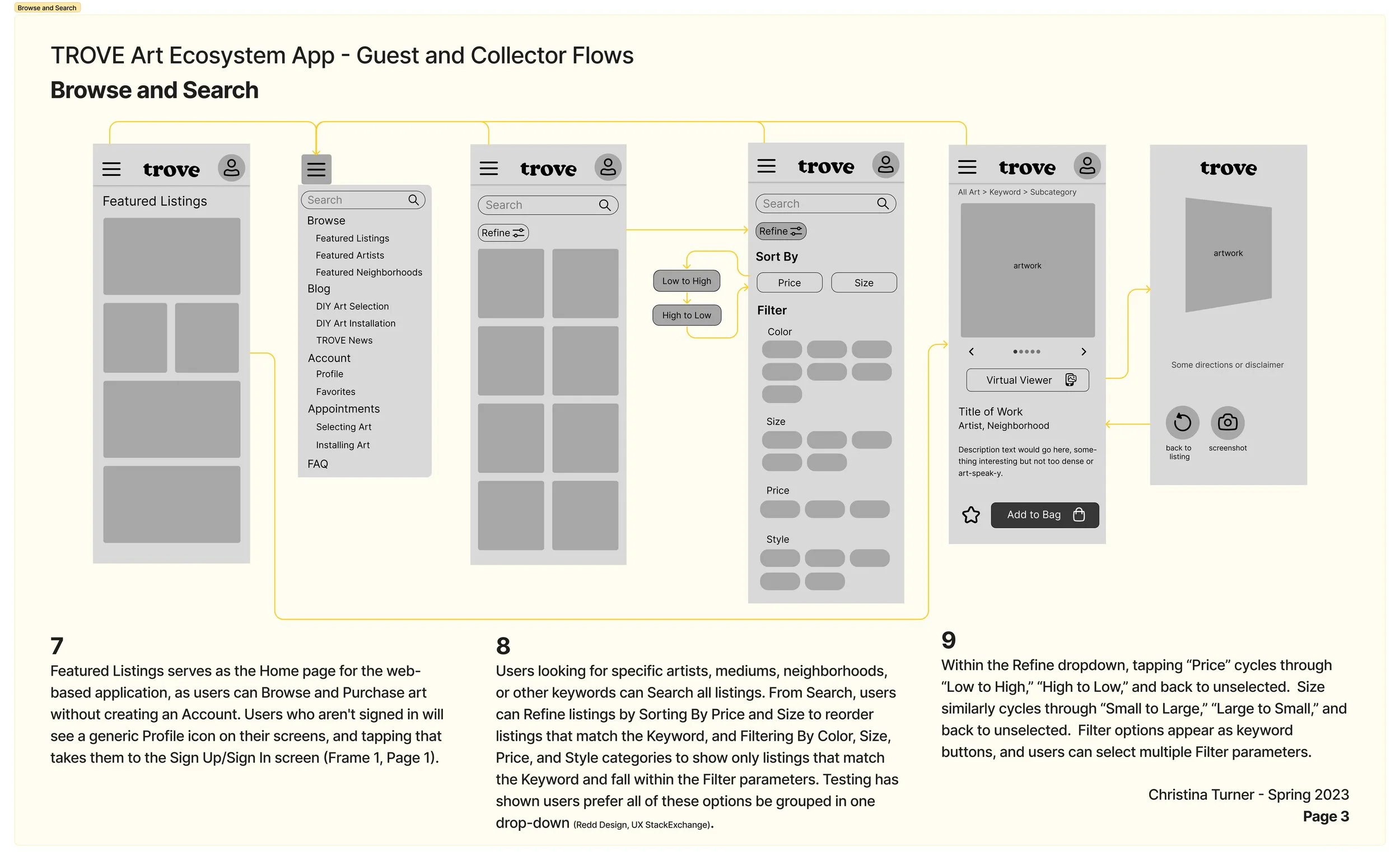
Views of the Menu, Search and Refine Listings, and an AR Viewer that would allow Guests and Collectors to better visualize art in their spaces.
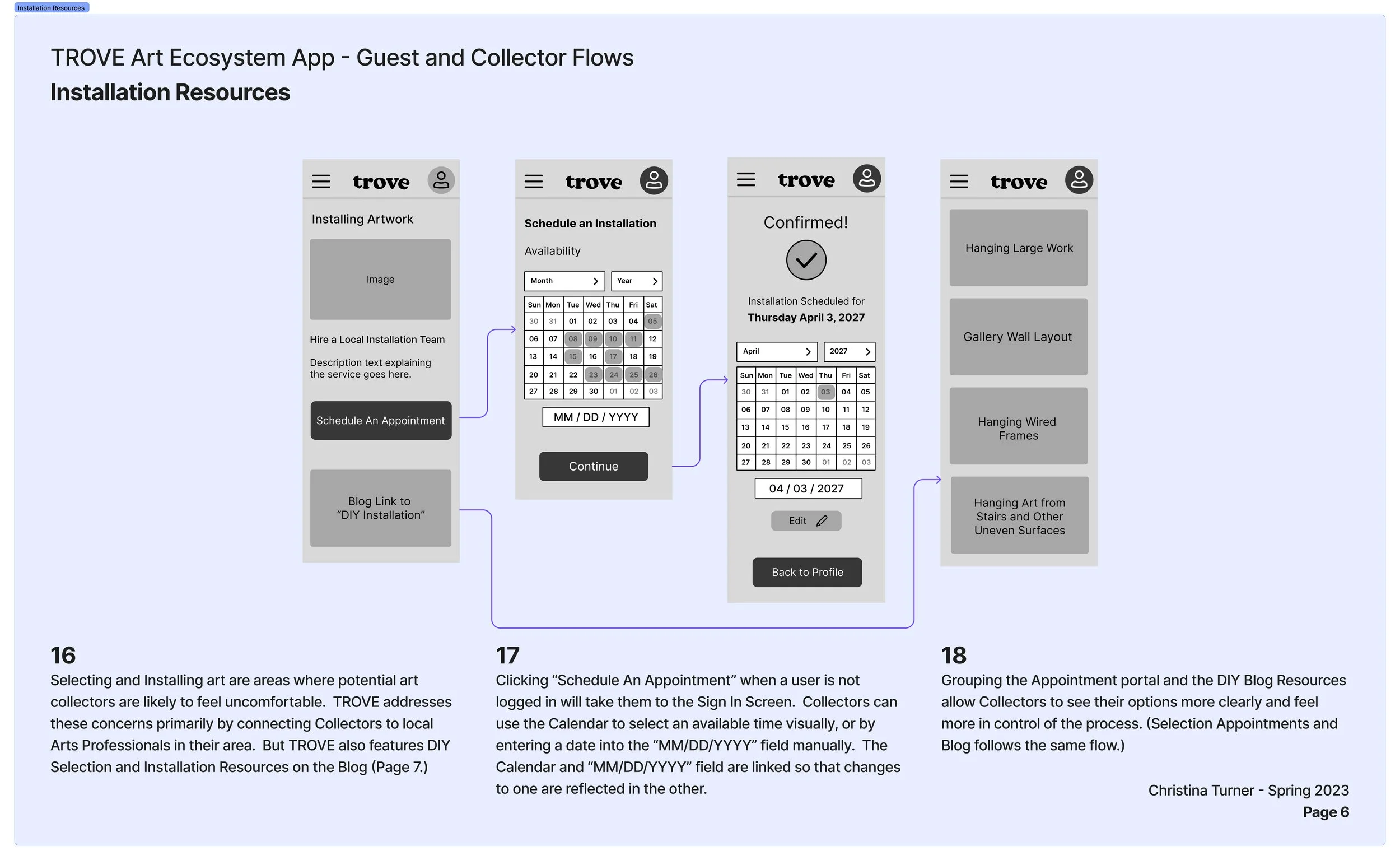
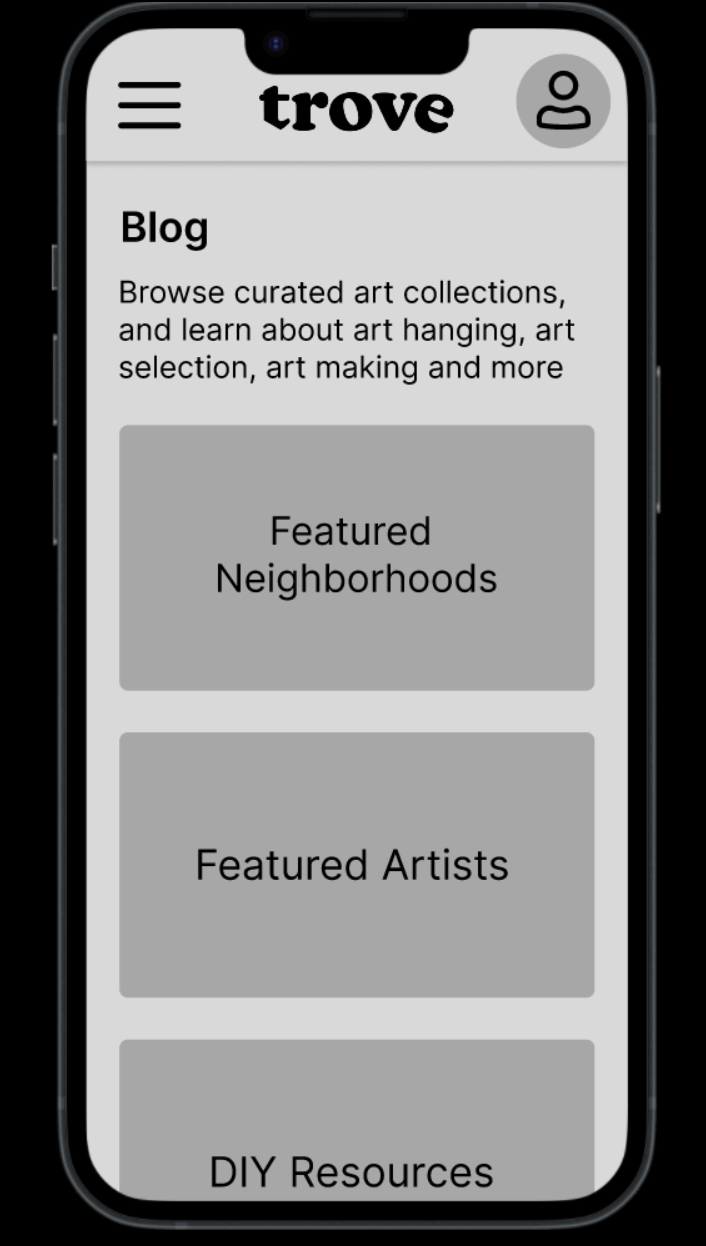
Blog and Appointment resources are organized thematically to help Collectors make informed choices about art selection and installation.
Explore a full clickable prototype for the Guest and Collector portions of TROVE by clicking the images below (prototype will pop up in another window.)
Lessons Learned
The MVP of a web application like TROVE is essentially existing art selling sites, like Etsy or Saachi Art. I originally envisioned a single app that was for all users, but even Etsy has a separate product for Artists, and it might make sense to similarly split these divergent paths into a suite of web applications: TROVE for Collectors, TROVE for Artists, and TROVE for Arts Professionals. TROVE would also require a full time staff to maintain the app and its content, which would also require a full proprietary web product.
Testing might reveal just how much a separate Guest process is necessary: do people really want to go through the entire buying process without creating an Account? How many times do they visit the site, and/or a specific listing, before buying? I set up a process for Guests to be able to schedule an Installation Appointment during checkout, but depending on the cost to build out a separate Guest and Collector Installation Appointment procedures, as well as the cost to support this feature vs. potential utilization rates, it might make sense to require an Account for all Appointment Scheduling. I’m thinking through working out all these sorts of details with a team, and how these details might be refined, expanded, or streamlined over time.
An app like TROVE could be transformational for regional arts economies. If you’re reading this and interested in developing it, reach out! christina@happywonderfool.com